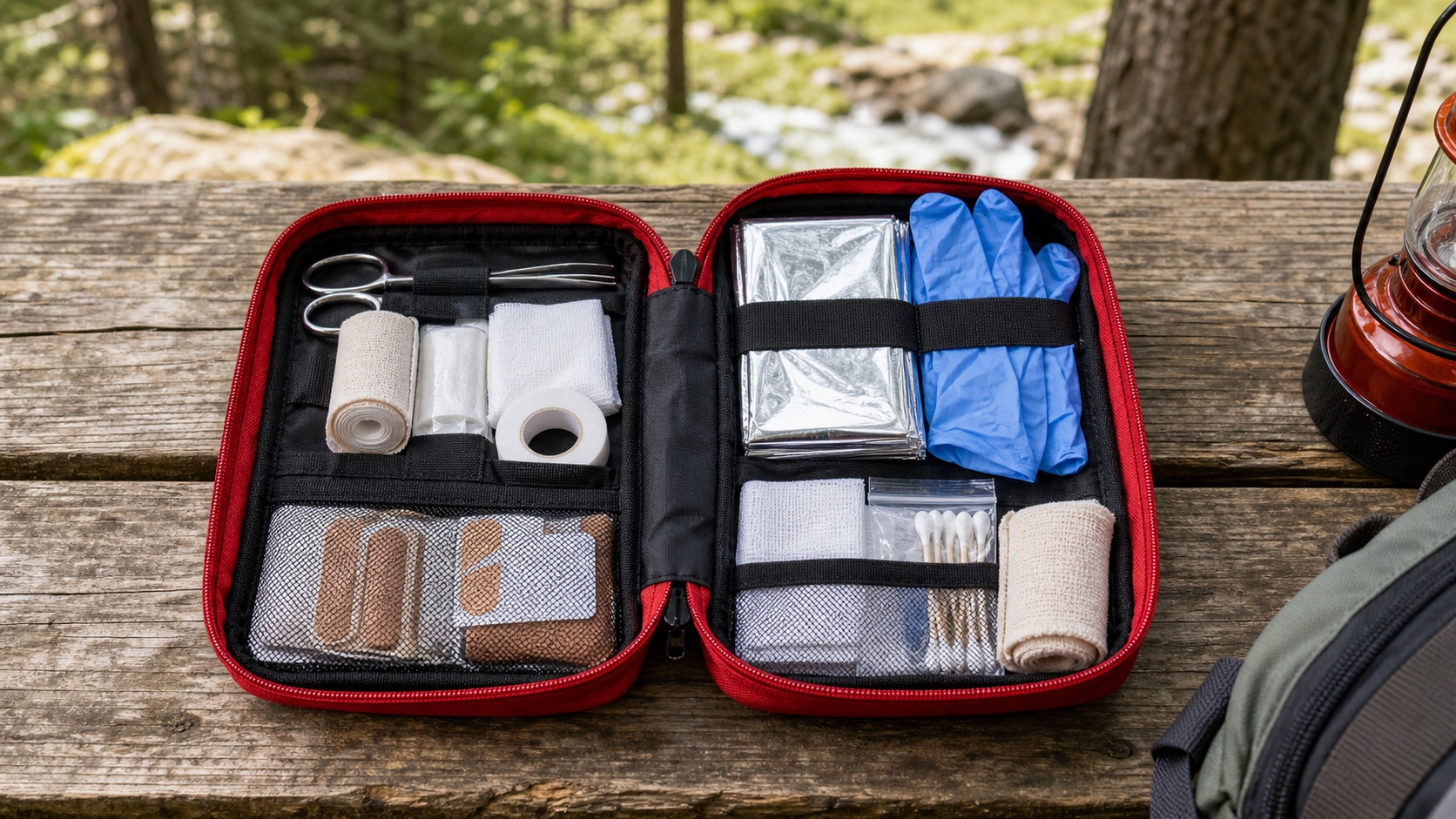
Camping First Aid Kit Checklist: Wilderness Medical Field Guide
Comprehensive wilderness first aid kit checklist and emergency action triage protocols. Features interactive packing filters for day hikes, family car camps, backcountry multi-day expeditions, and camping with dogs, plus a free 1-page printable emergency PDF cheat sheet.
Arm sling for shoulder dislocation/fracture, or folded into cravat for tourniquet / pressure dressing.
Splints & Support
Field Tip:Multipurpose wilderness tool: sling, tourniquet wrap, or head bandage.
Waterproof Zinc Oxide / Cloth Medical Tape (1 in)1 roll
Secures dressings, stabilizes sprained fingers (buddy-taping), and reinforces blister pads.
Splints & SupportHigh Priority
Fine-Tipped Splinter / Tick Tweezers1 pair
Precision extraction of wood splinters, cactus spines, and Lyme-transmitting deer ticks.
Tools & DiagnosticsHigh Priority
Field Tip:Grasp tick body right at skin surface; pull straight outward smoothly without twisting or crushing abdomen.
Wound Irrigation Syringe (10-20 mL with catheter tip)1 syringe
Generates 7-8 psi of clean water pressure to flush gravel, ash, and organic dirt out of lacerations.
Tools & DiagnosticsHigh Priority
Field Tip:High-pressure irrigation with clean drinking water is the #1 defense against wilderness wound infection.
Stainless Steel Trauma Shears (5.5 in)1 pair
Blunt-tipped safety shears cut through heavy canvas work pants, boot laces, and seat belts without puncturing skin.
Tools & DiagnosticsHigh Priority
Medical Grade Nitrile Gloves (Latex-Free)2-4 pairs
Universal barrier precaution against bloodborne pathogens and dirt contamination.
Tools & DiagnosticsHigh Priority
Field Tip:Nitrile will not degrade with petroleum-based ointments unlike latex.
Mylar Emergency Thermal Space Blanket1-2 sheets
Reflects 90% of radiant body heat to counter shock, trauma heat loss, or unexpected night cold.
Tools & DiagnosticsHigh Priority
Field Tip:Wrap snug around patient with silver side in; pair with an insulated ground pad underneath.
CPR Pocket Mask / Face Shield (One-Way Valve)1 shield
Hygienic barrier protection during rescue breathing in remote cardiac or submersion events.
Tools & Diagnostics
Immediate Campsite Emergency Action Protocols
Standardized field rules for the top campsite injuries. Review before heading off-grid.
Field Protocol Steps:
Remove hot fabric, watches, or rings from the burned area immediately before swelling begins.
Douse or submerge the burn site with cool clean potable water for 10 to 15 continuous minutes.
Cover loosely with sterile non-stick gauze or a hydrogel burn dressing. Do not apply pressure.
Protect all blisters: never pop, drain, or peel blistered skin in the wilderness.
Evacuate immediately if burns cover hands, feet, face, groin, or measure larger than 2-3 inches in diameter.
Critical Contraindications (What NOT to Do):
DO NOT use freezing lake ice or snow packs; rapid thermal drop causes frostbite tissue necrosis.
DO NOT slather butter, oils, toothpaste, or petroleum jelly on fresh hot burns.
DO NOT wrap burns with fluffy cotton balls or fibrous towels that stick to open tissue.
01.Wilderness Medicine vs Urban First Aid: The 3 Golden Rules
In urban settings, calling 911 connects you to advanced life support paramedics in 8 to 12 minutes. In the backcountry, professional rescue can take 4 to 24+ hours depending on terrain, weather, and satellite communication coverage. A true camping first aid kit is not just a box of band-aids; it is a portable stabilization station designed to prevent minor irritations from escalating into life-threatening emergencies.
Rule 1: Stop Bleeding and Protect Airway First. Maintain direct firm pressure with sterile gauze for 10–15 minutes without lifting to inspect.
Rule 2: Aggressive Wound Irrigation. Wilderness lacerations contaminated with campfire ash, trail dirt, or river silt must be thoroughly flushed with 10–20mL of clean treated water under pressure.
Rule 3: Environmental Barrier Isolation. Traumatized or burned campers rapidly lose core body temperature; always insulate from cold ground using an inflatable sleeping pad and Mylar reflective blanket.
Wilderness Medicine vs Urban First Aid: The 3 Golden Rules reference table
Deep lacerations, joint fractures, GI illness, dehydration
SAM Splint + Irrigation Syringe + Loperamide + ORS
Camping with Dogs
Additional 8 oz
All Trips
Torn dewclaws, sliced paw pads, burrs, tick removal
Cohesive Vet Wrap + Styptic Powder + Dog Booties
02.The 5 Essential Supply Pillars of a Wilderness First Aid Kit
1. Wound & Burn Care: 4x4 and 2x2 sterile gauze pads, Coban self-adherent wrap, butterfly wound closures (Steri-Strips), bacitracin ointment, and hydrogel burn dressings for campfire sparks and Dutch oven contact burns.
2. Medications & Oral Rehydration: Ibuprofen (anti-inflammatory), acetaminophen (pain/fever), diphenhydramine (rapid-acting antihistamine for stings and allergic hives), loperamide (prevents debilitating fluid loss from giardia), and oral electrolyte rehydration salts.
3. Splinting & Orthopedic Support: Malleable 36-inch SAM splint, elastic ACE compression bandage, triangular bandage / cravat (arm sling or tourniquet base), and 1-inch waterproof cloth medical tape.
4. Field Tools & Diagnostics: Fine-tipped splinter tweezers, 10–20mL wound irrigation syringe, blunt-tipped stainless trauma shears, nitrile gloves, CPR pocket face shield, and Mylar emergency thermal space blanket.
5. Canine First Aid (Pet Friendly): Flexible cohesive vet wrap that does not stick to dog fur, styptic powder to quickly stop bleeding from broken toenails, and protective rubber dog booties.
03.Blister Prevention, Campfire Burns & Field Triage Protocols
Friction blisters are the #1 physical injury that ruins outdoor camping trips. At the first sign of a pink "hot spot," clean and dry the skin immediately and apply pre-cut Moleskin or a hydrocolloid bandage. If a blister has already formed, cut a donut-hole ring of Moleskin around the perimeter to elevate boot pressure off the blister roof.
For campfire and cooking burns: immediately submerge or douse the burned area with cool clean drinking water for 10 to 15 minutes. Never apply ice, snow, butter, bacon grease, or heavy petroleum jelly to fresh burns, as trapped heat accelerates deep tissue necrosis. Cover loosely with non-adherent sterile gauze or a hydrogel sheet. Evacuate immediately if burns cover the face, hands, feet, or groin, or measure larger than 2–3 inches in diameter.